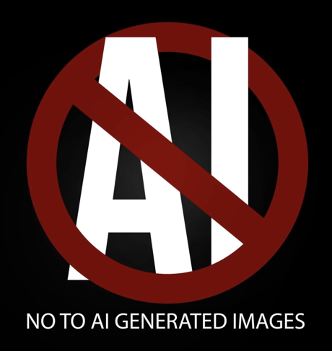
Some Vancouver Island University Graphic Design students are boycotting AI-generated art, arguing that the new technological capacity to assemble art threatens authorship, real creative production, and cultural authenticity.
Generative AI as accessed in programs like ChatGPT, Claude, Gemini, Copilot, Perplexity, Grok and particularly with respect to images in apps like Midjourney, Runway, Stable Diffusion, Firefly, Ideogram, Recraft, and Synthesia, can easily mimic other artists’ styles and generate art in a fraction of the time it takes human artists using only their own skills to do so. This raises both ethical and financial concerns regarding consent and pay.
“I believe AI art is not real art. I think it goes against the definition of what art is at its core,” said Grei Orser, a 4th-year Graphic Design student at VIU and an employee of the Nanaimo Art Gallery. “It takes away that essential human art-making experience.”
These discussions are already bringing about change in university classrooms. VIU students and professors in Media Studies and Graphic Design are challenging the use of AI tools and highlighting the value of originality and creative thinking. They also cite recent court cases that have ruled AI cannot be copyrighted, so any media that includes it loses the ability to patent intellectual property and exclusively claim revenues from it.
“We’re discouraged from using it to generate photos…but we are encouraged to use it for brainstorming ideas,” Orser said. This distinction, he said, acknowledges the reality of the design industry while preserving creative agency.
“Human artists are very diverse,” said Ataene Dienye, a freelance artist and VIU Media Studies graduate. “You have realistic styles, you have cartoonish styles, and animated styles. People have their own approach, whether it’s physical paintings or digital paintings; it’s very unique.”
Dienye said, “AI art is literally taking from actual human beings and their work. I don’t like the idea that people are just typing in prompts and calling themselves artists.”
Dienye urges the public to promote ethical creativity by appreciating human-made art, inquiring about the artistic process, and interacting with artists directly. “Seeing everyone sharing their art and being passionate about their art makes me very hopeful,” Orser said.
“Art is such an essential part of humanity. I saw this quote recently by Mihika that said, ‘What is the earth without art? It’s just a rock.’ I’ve kept that in mind when I’m designing, when I’m creating art,” Orser said.