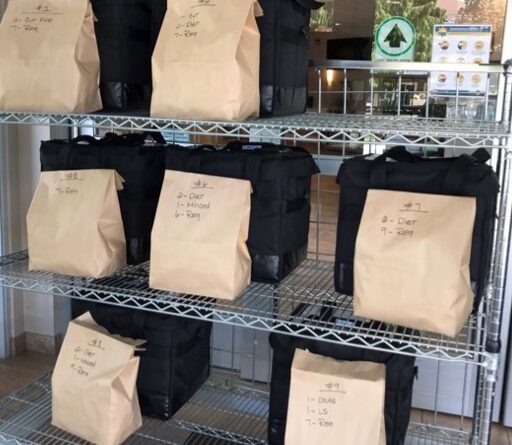
After 52 years serving Nanaimo, Meals on Wheels has updated its scheduling and bookkeeping systems for the first time in over a decade, launching a new digital program to manage growing demand, particularly from elderly residents, individuals recovering from surgery, and people with disabilities.
Meals on Wheels currently delivers 80-100 hot meals per day, six days a week. Each meal costs $8.50, including delivery, and includes a protein, starch, vegetables, and dessert.
The charity replaced its Microsoft Access database with Better Meal Delivery, a system that automates scheduling and delivery routes. Client Coordinator Sam Relf said the old system would “drop clients off the list just randomly,” and staff had to manually compare weekly route sheets to ensure no one was mistakenly removed.
Relf said the new system has significantly improved accuracy. “When clients have certain days that they like, I can set it up in the system and not have to think about it,” she said. “It’s made my job a lot more organized.”
The modernization comes as the program experiences steady growth. Relf said the office receives approximately two to three new client inquiries per week, often from adult children arranging meals for aging parents.
“It’s a bridge before people go into long-term care,” Relf said, noting that part of the demand comes from families facing long waitlists for care facilities.
Despite the shift to a digital management system, Michèle Mazzarotto, a Day Captain and volunteer driver, said technology cannot fully replace the human element. “It’s always going to be a balance between digital systems … and people. You have to honour both,” she said, noting that some aspects of the system still require manual oversight.
The charity operates out of Kiwanis Village, 1233 Kiwanis Crescent near the hospital, and relies entirely on its 85 volunteer drivers to complete daily routes across Nanaimo and into Lantzville. According to Mazzarotto, coordination between staff and volunteers is essential to keeping the service running smoothly.
“The main challenge is that streamlined system between the clients, Kiwanis, and this major group of volunteers,” Mazzarotto said. As one of the few programs in Canada delivering meals six days a week, she added that “keeping everything working together and organized is probably the biggest challenge.”
Beyond delivering meals, volunteers often play a critical role in client safety. Drivers routinely check for signs of distress among clients, occasionally initiating wellness checks by police, social services, or healthcare professionals when something appears wrong.
Relf recalled a recent instance in which an untouched meal prompted contact with a family member, leading to the discovery of a client who had fallen and was unable to reach their phone for days. “She would have no way of knowing what was happening with her mom if someone wasn’t coming to deliver meals.”
Another key benefit of the service is the social connection it provides. Mazzarotto said volunteer drivers offer regular interaction for clients, with some visits lasting up to two hours. “I’ve learned that it’s important to be part of a community and to give what you can give,” she said, reflecting on the relationships built through the program.
Founded in 1971 in the basement of Brechin United Church in Nanaimo, Meals on Wheels has grown from handwritten route lists and paper maps into a digitally coordinated delivery network. Mazzarotto, who has volunteered with the organization for 10 years, said one of her proudest achievements is that “We never missed a day during COVID … except for maybe snow days.”
As demand grows, volunteer recruitment remains an ongoing issue for the charity. Each day requires 6-10 drivers, with spare drivers filling in for last-minute absences. “Spare drivers are golden,” Mazzarotto said. “We need them desperately, but they’re hard to find.”
Those interested in volunteering, donating, or learning more about meal programs can visit Meals on Wheels Nanaimo or contact the charity at mow@kiwanisvillage.ca.