Ramona Johnson is a K’omox First Nation Elder who curated the Indigenous owned I-HOS Gallery from 1995 – 2022. Johnson believes Indigenous art can be ethically reproduced and shared through, “cultural awareness, appreciation, and respect,” and by dignifying the artist and the work. This means being careful to include each piece’s cultural context and by paying royalties for every artwork sold.
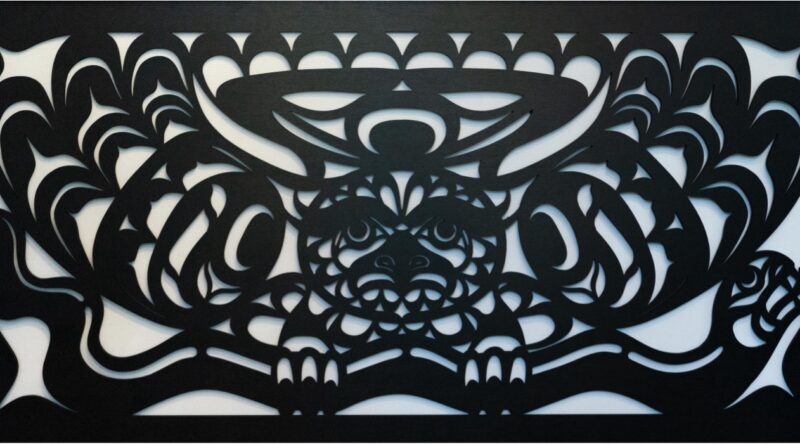
The gallery got its name from the double headed sea serpent I-HOS, an important figure to the K’omox People.
“Before,[businesses] would use in-house artists, and they would outright buy the art and would not issue royalties for the piece. There were not many indigenous-owned galleries, people who could stick up and support Indigenous artists and be a voice for them,” Johnson says.
Some customers might be hesitant to buy Indigenous artwork, fearful that the artists are being exploited or the work appropriated for white profits. This is even more true in the era of Truth and Reconciliation when more non-Indigenous Canadians have learned about the effects of colonization and residential schools on Indigenous people in this country.
CORE Landscape Products works with Indigenous artist Noel Brown who creates privacy screens for gardens featuring Coast Salish designs. Caroline Rutledge, CORE’s founder and owner, knew of Brown as a Snuneymuxw First Nation master carver from Nanaimo.
Megan Rutledge, Caroline’s daughter and CORE’s Online Growth Strategist, said her mother “commissioned him to do some screens and they really took off, so that’s how Noel became our first artist, and now people all over North America have Coast Salish art on their properties….We have just signed our third Indigenous artist and we have another three that are looking to send in some of their work to see if it will translate well to privacy screens,” said Megan.
“I wanted something unique and different; my daughter had always been exposed to Indigenous communities and I loved the [art] work. I thought if you could do it with jewelry, why couldn’t you do it on PVC? Noel Brown was willing to work with us and adjust his designs for PVC … I thought it would help to bring exposure and support local artists,” said Caroline.
Still, Megan understands customers’ concern regarding authenticity and respect for Indigenous artists. “While I was doing my degree in Anthropology, I came back to CORE concerned about our use of Indigenous art. I said, ‘Mom, I just learned about this thing called cultural appropriation’ and jumped down her throat and that’s exactly what people online are doing without doing their research.”
“All our artists receive royalties and will for time immemorial for all their designs, regardless of which dealer is selling them. They will receive royalties on every single product made with their designs. Every single social media post I share has the artist names, where they are from, and the traditional name of their design,” Megan says as assurance that credit and compensation go to the artist directly. This helps to counteract online Facebook comments like “More white people profiting off of Indigenous artwork.”
CORE Landscape Products has now been selling Brown’s privacy screens for 6 years and Johnson owns one. Johnson says, “There is no more exploiting the artists. There is no more just $500 and then the business makes all the money on that piece 10 years down the road. No more in-house artists mimicking the designs so that they are making the money, and nothing is going to our people.…All our people who are working with companies now receive royalties and that didn’t happen before.”
“We just need to know that they are treating our artists with the respect and dignity they need to be given because that company is taking our people’s designs, which a lot of the time is their family designs because they carry on for generations,” Johnson says.
Johnson explains how important permission is for each individual work. “If they are changing anything or want to put the design on something else, they need to get permission from the artist. I had one artist who was working with a company, and they wanted to put the design on a liquor flask, and the artist said no, nothing to do with alcohol and my artwork. So, it really depends on each artist and the individual relationship these businesses have with an artist.”
Others worry meaning is lost when Indigenous artwork is commercialized, but Johnson feels that things have changed recently. Local governments “are giving contracts to the local bands for Indigenous pieces in the community, so the stories can stay in the communities [to promote] cultural awareness, appreciation, and respect,” Johnson says.
“It helps to have the Indigenous programs in the school, the Long House program that starts in Grade 4, [when] our school district comes to our big house. They also have Indigenous workers at every school. Changes like Orange Shirt Day, September 30th, and with reconciliation now everyone understands what we went through,” Johnson says.
These educational efforts inform citizens about Indigenous culture, including business owners who now understand what is required to recognize and promote Indigenous artists.