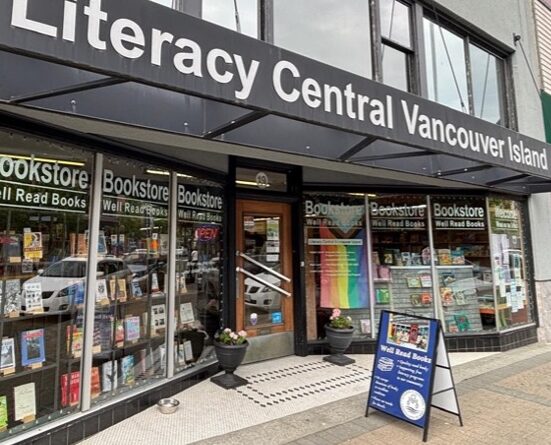
Gerald Halabura, Executive Director of Literacy Central Vancouver Island (LCVI), said nearly 50% of British Columbians have reading skills below what is needed for everyday life. LCVI is responding to the growing financial literacy crisis by delivering programs that support anyone in need, but particularly newcomers to Canada, seniors, adults experiencing economic hardship, and Indigenous survivors of residential schools.
Halabura said financial literacy has become an increasing concern, including understanding “how to manage your money” and “basic math.” To address this ongoing issue, Indigenous Literacy Coordinator Aimee Chalifoux set out to design a literacy program that was accessible to all learners.
“When I sat down to put together a financial literacy program, a workshop, I thought, ‘How am I going to make this fun? How am I going to make this appealing?’” Chalifoux created Money Stories, a program that uses storytelling and fictional scenarios to solve real-life budgeting challenges. “The nice thing about that was that there’s no stigma attached,” she said. “You’re not saying it’s for you. It’s for this character you’ve created.”
Chalifoux said her approach to supporting clients has been especially effective for learners facing multiple barriers. “I always meet them where they’re at,” she said. “Everybody comes from different backgrounds …and walks of life, but we’re all the same.”
For participants, Literacy Central’s impact is both practical and personal. Gordon Elless, a 65-year-old client who has been with the organization for three years, said the programs have helped him manage government paperwork.
“You’ve got barely any money, and the government is saying, ‘Well, we’re going to give you some, but we’re not going to give you a lot,’” he explained. “So, you’ve got to learn how to balance everything.”
Beyond literacy skills, Elless emphasized his connection to Literacy Central. “It helps me fit in,” he said. “You’re not isolated away from the community. Isolation is really bad for us.”
Halabura said stories like Elless’ highlight the broader impact of literacy work. “It’s such an empowering thing when suddenly clients can read, they can complete government forms, they can go on to other programs that they didn’t have access to before,” he said. It helps them “become more self-reliant and engaged in the community.”
Founded in the early 1990s, Literacy Central was established by community members who recognized a need to support adults who could not read or write. At the time, few literacy programs were available. “There was a lot of stigma associated with being an adult and not knowing how to read,” Halabura said.
A key part of Literacy Central’s stability comes from its social enterprise bookstore, Well Read Books. “All the books are donated. We have great volunteers who curate and keep the bookstore fresh, and all those funds are there to help us provide the programming and pay for our coordinators,” Halabura explained. “That gives us a bit of freedom to really focus on what people need.”
Over the last three decades, Literacy Central has adapted to their clientele’s changing needs, ranging from English-language learning and basic literacy to digital and financial skills.
As the need for literacy support continues to grow, Halabura said stable funding, volunteers, and donations will be essential to maintaining and expanding services that Vancouver Island residents increasingly rely on. “Spread the word about the power of volunteering and get more people involved … that would help make our life a little easier.”
Those interested in donating, volunteering, or learning more about programs can visit Literacy Central Vancouver Island or contact the organization at info@lcvi.ca.